The marketing team built 30+ landing pages and 13 feature pages themselves
Assignment
deskbird is growing rapidly, and with that growth came an increased need for new landing pages and feature pages. The existing setup, however, wasn't built for this: every new page required developer support, updates were time-consuming, and the website was becoming a bottleneck for the marketing team.
Challenge
The live site, containing legacy elements, had to be rebuilt during ongoing daily operations—without any downtime or disruption to existing marketing activities.
Solution
The migration was carried out incrementally and in parallel with live operations, ensuring deskbird could continue to run landing pages and campaigns at all times. We transitioned the structural foundation from Client-First to the Lumos framework, moving from page-specific solutions to a consistent, centrally managed class system.
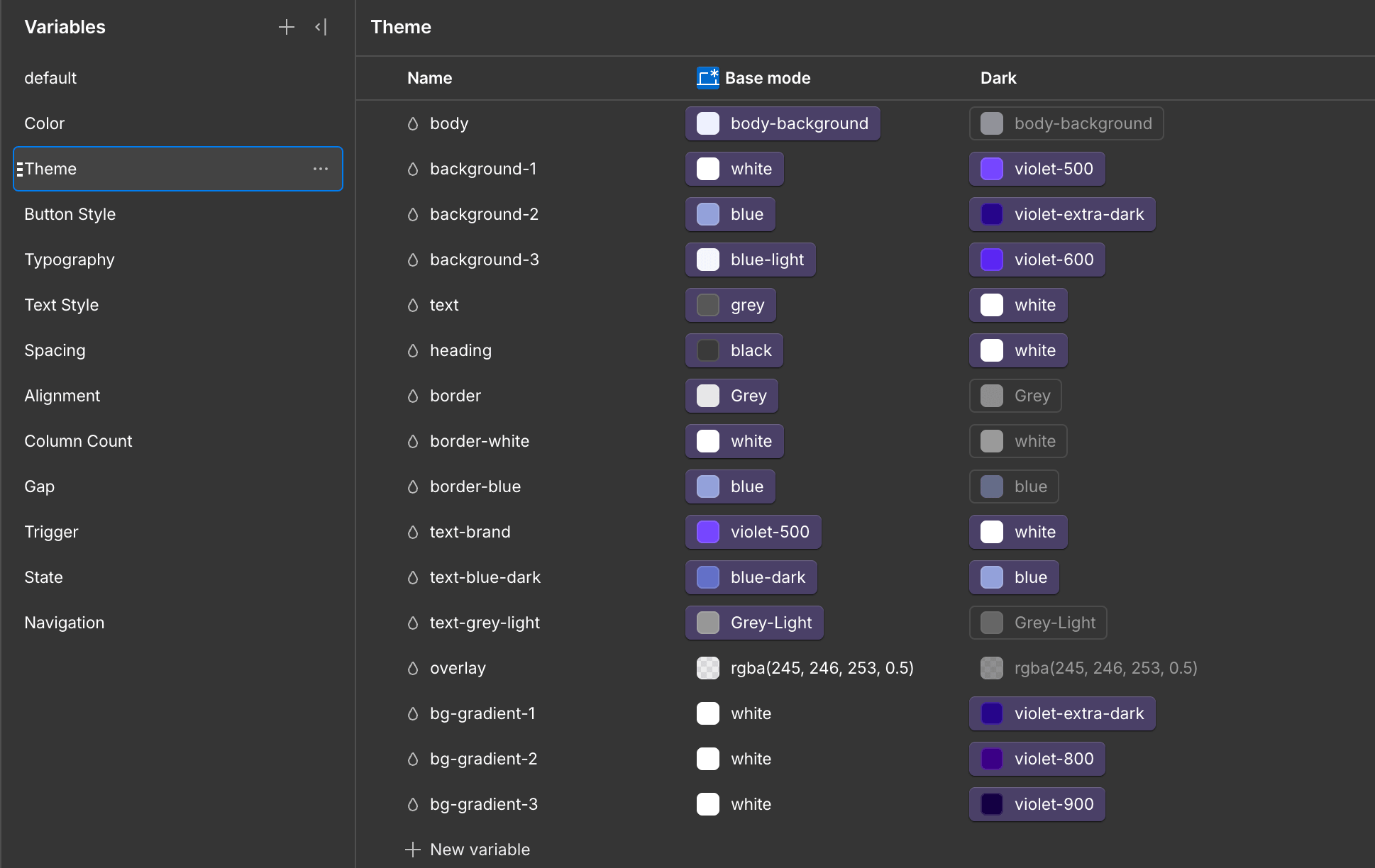
The core of the new system consists of custom variable collections for spacing, columns, alignment, gapping, triggers, states, and themes. This allows for central definition and consistent application of margins, grids, alignments, and states across all pages—system-wide changes take effect immediately, eliminating the need for manual, page-by-page adjustments.
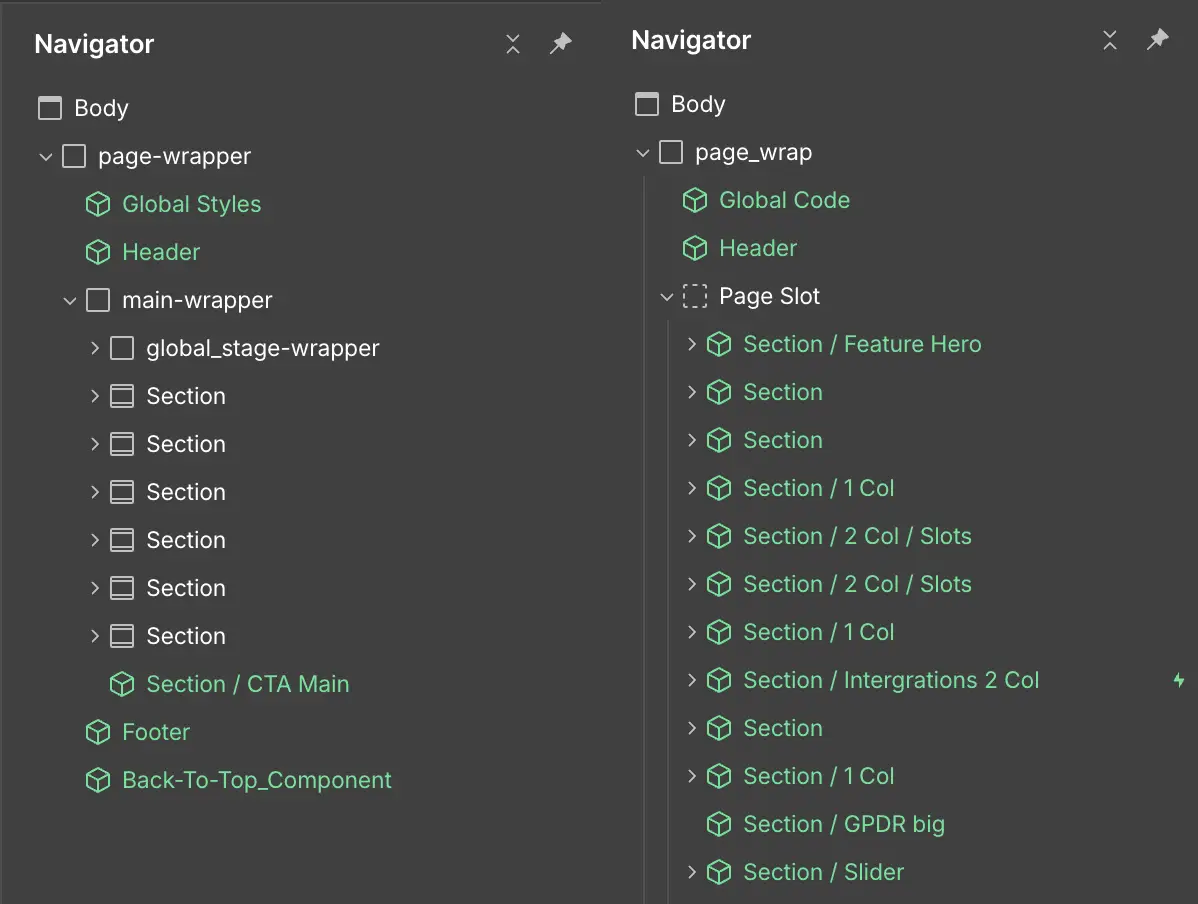
Building on this, we developed an extensive component library that allows the marketing team to assemble new pages using pre-built, flexible modules—without needing to rely on developer resources for every new landing page.
A key architectural decision was to move away from breakpoints: new layouts and components are based on containers rather than fixed breakpoint overrides. As a result, they are significantly more robust when handling varying content lengths and screen sizes, while keeping the CSS lean and maintainable.
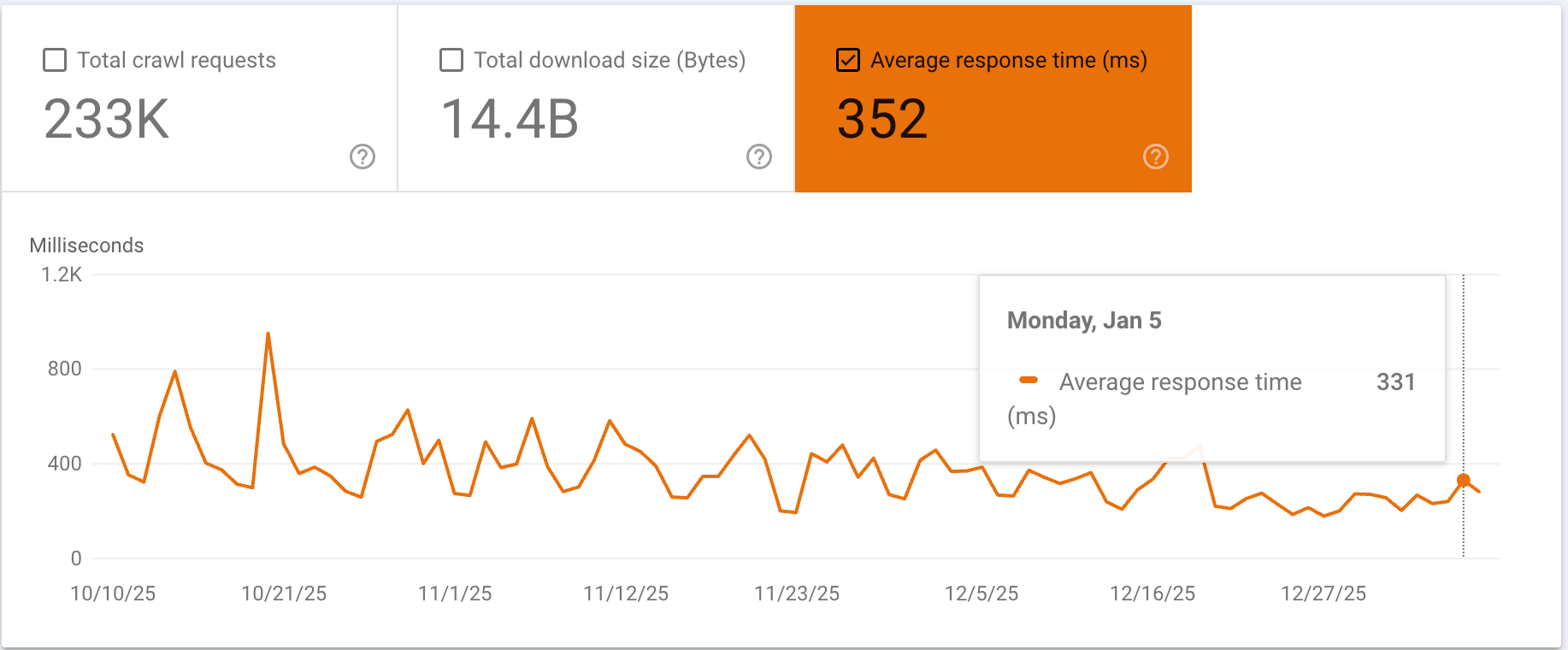
The rebuild led to additional improvements: targeted color adjustments increased contrast and improved accessibility, while technical cleanup directly boosted performance—average response times dropped from over 800ms in October 2025 to approximately 300–400ms as of February 2026, accompanied by a noticeably faster page speed.
The rebuild involved close collaboration with deskbird’s in-house design team to ensure the new system aligned seamlessly with the existing brand identity. Technical SEO and tracking were optimized in collaboration with an external SEO freelancer and tracking specialist.
The result: Using the new system, the marketing team has independently built 30+ landing pages and 13 custom feature pages—quickly, consistently, and without having to wait for developer capacity.